
Beeswax & Monasteries
Beeswax Candle Traditions in the Monasteries of Umbria
How Umbrian monasteries shaped the production and ritual use of beeswax candles over six centuries, and what survives of that tradition today.
Candle-Making & Artisan Wick Crafts — Italy
From monastery beeswax candles in Umbria to hand-braided cotton wicks in rural workshops, this archive documents the materials, methods, and regional variations that define Italian candle craft.

Archive Articles
Three detailed explorations of Italian candle craft, covering monastery production, wick braiding techniques, and the regional properties of native wax types.
Beeswax & Monasteries
How Umbrian monasteries shaped the production and ritual use of beeswax candles over six centuries, and what survives of that tradition today.

Wick Crafting
The practical steps behind wick selection, cotton fibre preparation, and the braiding patterns that Italian candle makers have passed down across generations.

Regional Materials
A comparison of beeswax, bayberry, carnauba, and locally rendered tallow across Italy's north-south geography, with notes on melting points and burn behaviour.
The monasteries of Umbria — from Norcia to Assisi — maintained dedicated apiary plots and wax-rendering rooms well into the nineteenth century. Their records offer one of the most detailed accounts of pre-industrial candle production in the Mediterranean world.
Read the full accountWick Craft
Before industrial spinning made uniform wicks widely available, Italian candle makers sourced raw cotton, flax, or rush fibres locally and twisted or plaited them by hand. The gauge, braid pattern, and fibre treatment all varied by region and by intended wax type.
In Tuscany, a flat braid was favoured for its predictable curl when burning in olive-wax candles. In the Veneto, twisted jute wicks appeared in cheaper tallow lights. Umbrian monastery records describe a three-strand plait stabilised in saltpetre solution — a treatment that reduces smoke and slows the burn rate.
Full wick craft documentation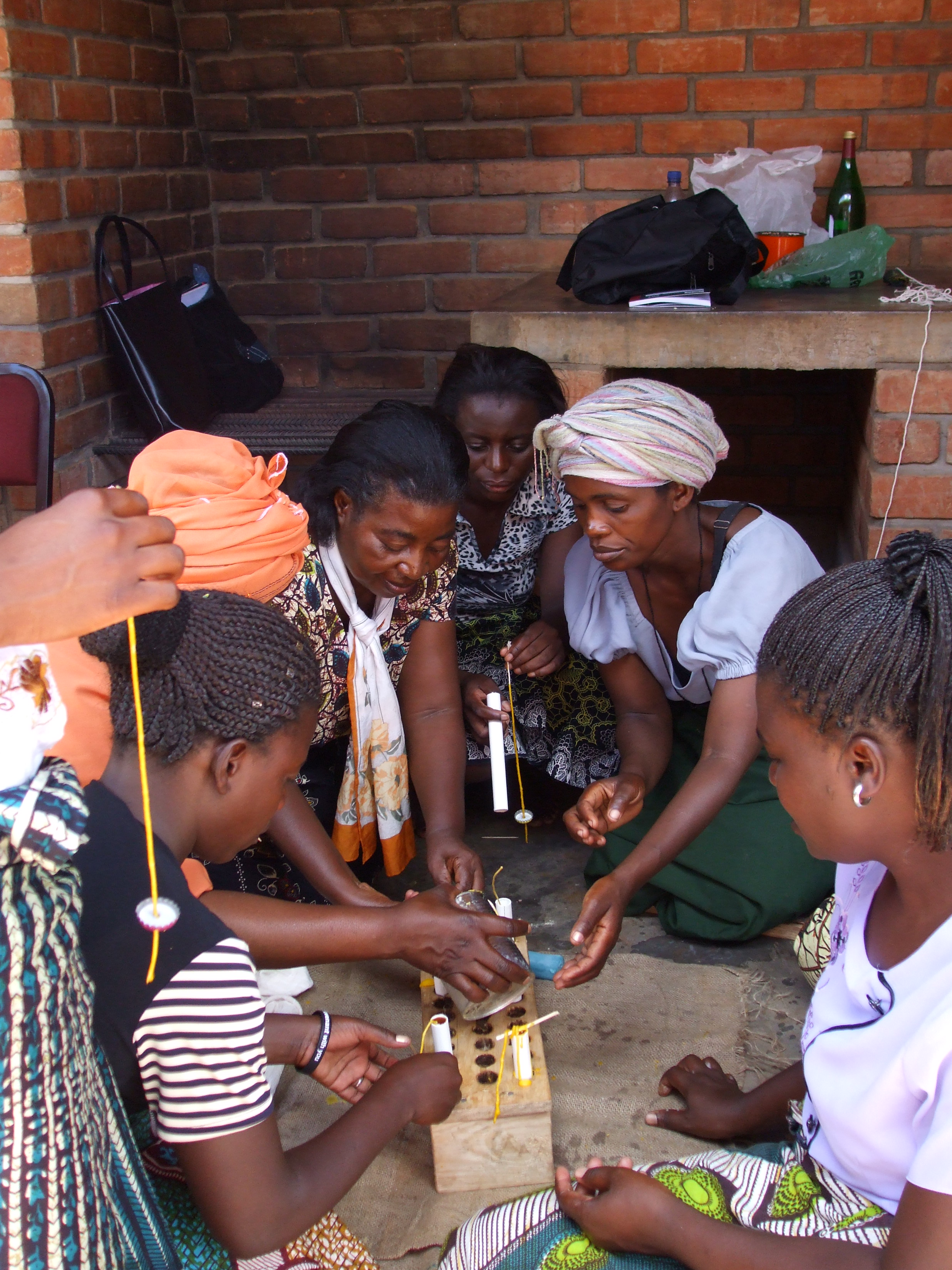
Materials
The most widely documented wax in historical Italian records. Melts between 62–65°C. Produces a slow, clean burn with a faint honey scent. Associated with ecclesiastical and aristocratic use.
Rendered from beef or sheep fat. Less costly than beeswax and dominant in everyday domestic use through the eighteenth century. Melting point around 40–48°C. Produces a smokier flame.
Introduced later via trade routes. Harder than beeswax with a melting point near 82–86°C. Used to raise the hardness of softer wax blends, particularly in summer production.
Rare in Italian production but documented in northern coastal areas. Extracted by boiling bayberries. Its greenish tint and aromatic quality made it a prestige material in small batches.
Entered Italian candle craft in the mid-nineteenth century. Lower cost and high availability shifted production economics. Traditional craftsmen often blended paraffin with beeswax to retain scent and hardness.
A lesser-documented regional material. Residual lipids from olive pressing were occasionally rendered for candle use in oil-producing areas of Puglia and Calabria. Burn quality was inconsistent.
Italy's geographic range — from the alpine north to the Mediterranean south — produced distinct material cultures in candle craft. The available wax type, local climate, and intended use all shaped how candles were made and how long they burned.
Explore the comparisonFor source requests, corrections, or regional documentation contributions, use the form or contact us directly.
Via della Cera 14, 06121 Perugia PG, Italy
+39 075 572 0100
info@hearthwick.eu